
Agency Brand Delivery: From Chaos to Clarity
The successful handover of brand assets marks the culmination of a creative project, yet for many agencies, it often descends into a chaotic scramble….
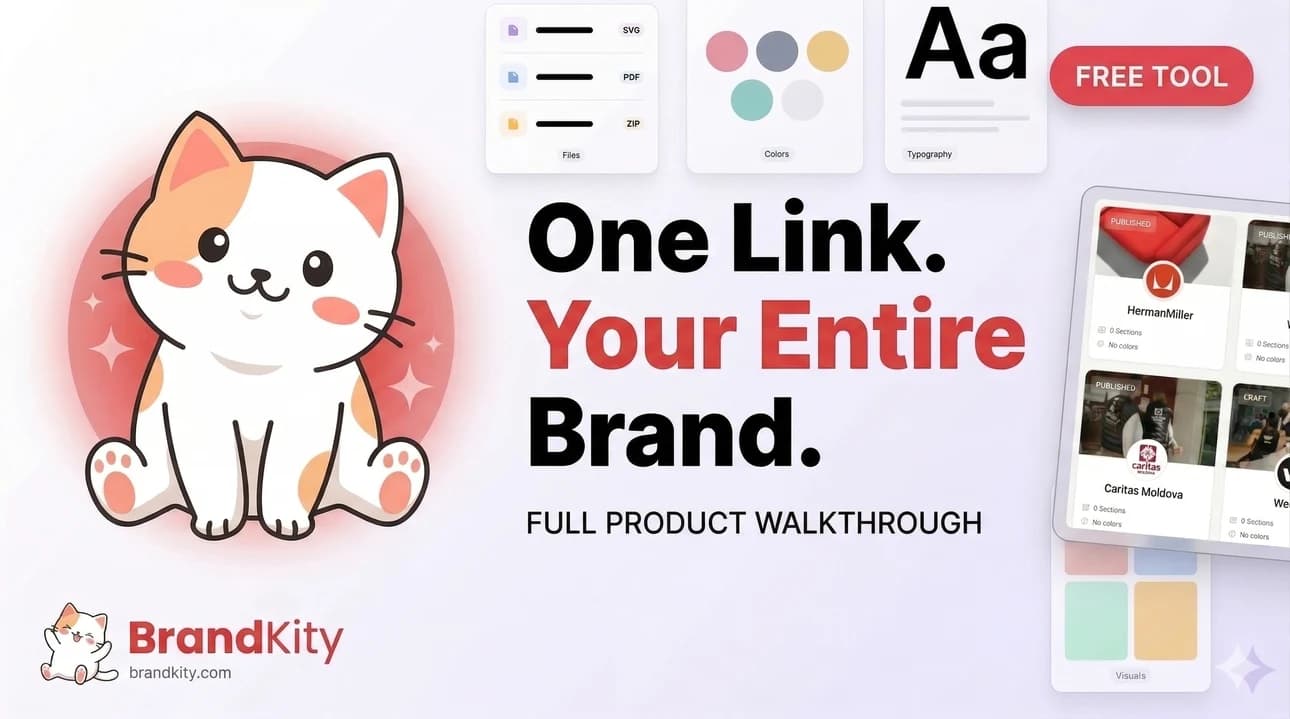
Table of contents
- The Scrambled Brand Assets: Why Current Delivery Fails Agencies (and Clients)
- The common pitfalls of scattered files and disorganized client folders.
- Client confusion and the resulting back-and-forth frustration.
- The hidden costs of inefficient brand asset management.
- Defining a ‘Clarity’ Standard for Brand Asset Handoff
- What does a truly clear and professional brand delivery look like in 2026?
- Key characteristics of a successful brand asset handover.
- The client’s perspective: what makes them feel confident and understood.
- Streamlining Your Agency’s Asset Organization Before Delivery
- Establishing a universal file naming convention for all brand assets.
- Categorizing and tagging assets for easy retrieval (logos, fonts, colors, imagery, etc.).
- Implementing a version control system for iterative design changes.
- The Power of a Centralized Brand Hub: Your ‘One Link’ Solution
- Why a single, curated link is the future of brand delivery.
- What essential elements should be included in this central hub?
- Ensuring accessibility and user-friendliness for clients of all technical levels.
- Beyond Logos: Packaging Every Brand Element for Success
- Detailed breakdown of essential brand assets (logos, color palettes, typography).
- Including imagery, icons, illustrations, and other visual assets.
- Providing usage guidelines and do’s/don’ts for each asset type.
- Crafting Client-Ready Brand Guidelines That Actually Get Used
- Translating technical specifications into actionable design rules.
- Focusing on practical application and real-world scenarios.
- Visual examples and mood boards to reinforce brand identity.
- Integrating Design Systems into Your Brand Delivery Workflow
- How design systems improve consistency and scalability.
- Connecting design system components to the delivered brand assets.
- Empowering clients to maintain brand integrity autonomously.
- Automating the Handoff Process: Saving Time and Reducing Errors
- Leveraging technology to automate asset organization and sharing.
- Setting up automated notifications for clients.
- The role of specialized platforms in streamlining delivery.
- Educating Your Client: Facilitating Their Understanding of Brand Assets
- Measuring the Impact: How Clarity Transforms Client Relationships
When brand assets are mishandled, the impact extends far beyond a simple file transfer. It can erode client trust, lead to costly rework, and ultimately diminish the perceived value of your agency’s work. Fortunately, with strategic organization and the right tools, achieving clarity and efficiency in brand delivery is not just possible, but essential for thriving in today’s competitive landscape.
The Scrambled Brand Assets: Why Current Delivery Fails Agencies (and Clients)
The common pitfalls of scattered files and disorganized client folders.
Many agencies fall prey to a disorganized approach to brand asset delivery, leading to a trail of scattered files across disparate cloud storage services, local drives, or even outdated email threads. This lack of a centralized system means that crucial brand elements—logos in various formats, specific font files, color palettes, photography, and even key brand guideline documents—become difficult to locate, both for the agency team and the client. This problem is exacerbated when multiple designers work on a project, each with their own filing habits. The result is a fragmented collection of assets that often lacks a clear hierarchy or consistent naming convention, making it a significant challenge to ensure the client receives a complete and usable package. For instance, a client might receive the same logo in .jpg, .png, and .eps formats, but with different file names like “logo_final.jpg,” “client_logo_v3.png,” and “BrandKity_Logo_Final_Use.eps,” creating immediate confusion about which version is the approved one.
The absence of a structured process for organizing and delivering these files leads to tangible operational inefficiencies. Agencies often spend valuable time searching for specific assets when a client makes a request, delaying responses and impacting overall productivity. This is not just an internal issue; it directly affects the client experience. When clients struggle to find the files they need for their own marketing efforts, it reflects poorly on the agency’s professionalism and preparedness. This scenario highlights the critical need for a streamlined approach to asset management, moving beyond ad-hoc methods to embrace systematic organization that benefits everyone involved.
Client confusion and the resulting back-and-forth frustration.
When brand assets are delivered in a haphazard manner, clients are left to navigate a confusing labyrinth of files and folders. They often don’t know which logo version to use, which color codes are primary, or where to find the correct font files. This ambiguity forces them to repeatedly contact the agency for clarification, turning what should be a straightforward handover into a prolonged, frustrating exchange. For example, a client might use a low-resolution JPEG logo on a billboard because they couldn’t find the high-resolution vector file, leading to a pixelated and unprofessional display. This situation not only wastes the client’s time and resources but also tarnishes the agency’s reputation for delivering polished, professional results. A clear, organized delivery builds trust, while confusion breeds doubt and dissatisfaction.
This constant back-and-forth erodes goodwill and can even lead to clients questioning the agency’s competence. Imagine a scenario where a client needs to brief a new printer, but struggles to provide them with the correct brand files. They’ll likely have to bother the agency again, causing delays and potential additional costs. This repetitive need for support, born from unclear delivery, can make clients feel unsupported and undervalued. It’s crucial to recognize that a successful brand handover is not just about sending files; it’s about empowering the client with everything they need to effectively represent their brand moving forward. Investing in clarity upfront saves significant frustration and strengthens client relationships, making them more likely to return for future projects and refer new business.
The hidden costs of inefficient brand asset management.
The consequences of inefficient brand asset management extend beyond immediate client frustration; they incur significant hidden costs for agencies. One of the most prevalent is the wasted billable hours spent by agency staff searching for misplaced files or responding to repetitive clarification requests. A 2025 survey by Creative Insight Group found that agencies can lose up to 10% of their project hours on inefficient asset retrieval and client support related to disorganized deliveries. This directly impacts profitability, as time spent searching is time not spent on revenue-generating work or new business development. Furthermore, errors arising from incorrect asset usage—such as using outdated logos or incorrect color codes—can lead to expensive reprints, redesigns, or damage to the client’s brand equity, which the agency may be held responsible for.
Beyond direct financial costs, there’s the significant opportunity cost. When agency teams are bogged down by asset management chaos, they have less capacity for strategic work, creative innovation, or upselling existing clients. This can stifle growth and hinder the agency’s ability to take on more ambitious projects. Moreover, a reputation for disorganized brand deliveries can deter potential clients, especially those who value professionalism and efficiency. In today’s competitive market, agencies need to demonstrate not just creative talent but also operational excellence. The investment in a robust brand asset management system is therefore not merely an expense, but a strategic move that protects profitability, enhances client satisfaction, and unlocks greater potential for future success. Understanding these hidden costs underscores the urgency for agencies to adopt more sophisticated, organized approaches to brand asset handoff. Explore how to boost agency profit by streamlining brand delivery.
Defining a ‘Clarity’ Standard for Brand Asset Handoff
What does a truly clear and professional brand delivery look like in 2026?
In 2026, a clear and professional brand asset delivery transcends simply sending a zip file. It embodies a holistic, user-friendly experience for the client, empowering them with immediate access to all necessary brand elements in an organized, understandable format. This standard means providing not just the files, but also context and guidance. Think of it as a curated digital brand guide that is easily navigable and visually appealing. Clients should be able to find what they need within moments, whether it’s the primary logo in vector format for large-scale printing, specific hex codes for web implementation, or approved imagery for social media campaigns. A truly clear delivery feels less like an endpoint and more like the beginning of the client’s empowered use of their new brand identity. It signifies professionalism and demonstrates the agency’s commitment to the client’s long-term brand success.
This ideal delivery is characterized by logical organization, intuitive access, and comprehensive inclusion. It anticipates potential client needs, offering multiple file formats where appropriate (e.g., SVG, EPS, PNG, JPG for logos) and ensuring consistency across all provided materials. Beyond the assets themselves, it might include concise usage guidelines or a link to a more detailed brand book. The aim is to eliminate guesswork for the client, fostering confidence and ensuring the brand is applied correctly across all touchpoints. This approach positions the agency not just as a service provider, but as a trusted partner invested in the client’s ongoing brand integrity. The goal is to create a seamless transition, making the client feel exceptionally well-supported and confident in their ability to manage and deploy their brand effectively.
Key characteristics of a successful brand asset handover.
A successful brand asset handover is defined by several key characteristics that prioritize ease of use and comprehensive coverage. Firstly, logical categorization is paramount. Assets should be grouped intuitively, such as by type (logos, fonts, colors, imagery, templates) and by usage context (print, web, social media). This structure prevents clients from wading through irrelevant files. Secondly, consistent naming conventions are essential. Each file should have a clear, predictable name that indicates its content, format, and version, removing ambiguity about which asset to use. For example, “Logo_Primary_Color_Vector.svg” is far more useful than “final_logo.svg.” Thirdly, multiple, appropriate file formats must be provided. This means offering vector files (like SVG or EPS) for scalability and raster files (like PNG and JPG) optimized for digital use. A successful handover also includes clear usage guidelines, even if brief, to prevent misapplication of brand elements. Finally, and critically, the entire package should be easily accessible, ideally through a single, shareable link that doesn’t require complex logins or downloads. This multifaceted approach ensures that clients receive not just files, but a complete, usable brand toolkit.
Another crucial characteristic is version control and clarity. Clients need to be assured they are receiving the most up-to-date versions of all assets, with any previous iterations clearly marked as such or removed from the primary delivery set. This avoids confusion and ensures brand consistency. Moreover, a successful handover is contextual and supportive. This might involve including introductory notes, explaining the purpose of different file types, or offering a quick reference guide. The overall experience should feel curated and professional, reflecting the quality of the creative work delivered. Think about how ace brand delivery in your designer’s workflow by incorporating these principles. By focusing on these elements, agencies can transform the brand asset handover from a potential point of friction into a positive, confidence-building experience for their clients, solidifying their reputation for excellence.
The client’s perspective: what makes them feel confident and understood.
From a client’s viewpoint, confidence and understanding during brand asset delivery stem from a process that feels organized, intuitive, and comprehensive. When they receive a clearly structured package—perhaps a single link leading to well-organized folders for logos, colors, fonts, and imagery—they immediately feel that their project was handled with care and professionalism. A client feels understood when the delivered assets anticipate their needs, offering the right file formats for various applications (e.g., web-optimized PNGs for social media, high-resolution SVGs for print). Clear, concise explanations about asset usage, even in brief descriptions, go a long way in making them feel supported and empowered, rather than overwhelmed.
Furthermore, clients feel confident when the delivery process is frictionless and efficient. They don’t want to spend hours searching for a specific file or asking clarifying questions. A streamlined, one-link solution that requires minimal technical expertise to navigate is highly valued. This perception of ease and efficiency directly translates to trust in the agency’s capabilities. When an agency delivers assets in a way that makes the client feel competent and self-sufficient in using them, it reinforces the agency’s role as a reliable partner. This positive experience is key to fostering repeat business and encouraging referrals, as clients are more likely to remember and recommend an agency that made their post-project transition smooth and successful. Discover how to achieve organized brand assets that win client trust.
Streamlining Your Agency’s Asset Organization Before Delivery
Establishing a universal file naming convention for all brand assets.
Implementing a universal file naming convention is a foundational step toward organized brand asset delivery. This standardized approach ensures that every file, regardless of its type or the designer who created it, follows a predictable structure. A well-defined convention typically includes key information such as the client name, project identifier, asset type, version number, and file format. For example, a naming convention might look like: `ClientName_ProjectID_AssetType_Version_Format.ext`. So, a primary logo in color, saved as an SVG, could be named `AcmeCorp_WebsiteLaunch_Logo_PrimaryColor_v1_SVG.svg`. This systematic naming eliminates ambiguity and makes it incredibly easy for both agency team members and clients to identify and locate specific assets quickly.
The benefits of such a convention are manifold. It significantly reduces the time spent searching for files, minimizes the risk of using outdated versions, and provides a clear audit trail. When a client asks for a specific asset, the naming convention allows anyone on the team to locate it efficiently. This also aids in version control; clearly numbered versions ensure that everyone is working with the most current iteration. Adopting this practice requires initial effort to define the standard and train the team, but the long-term gains in efficiency and clarity are substantial. It’s an investment that pays dividends by preventing confusion and ensuring a professional, organized output. Consider this a crucial component in your agency workflow to simplify brand assets.
Categorizing and tagging assets for easy retrieval (logos, fonts, colors, imagery, etc.).
Beyond naming conventions, effective categorization and tagging are critical for making brand assets truly retrievable. Once files are consistently named, they need to be logically grouped and searchable. This involves creating a clear folder structure that mirrors the natural organization of brand elements. For instance, top-level folders might include ‘Logos’, ‘Color Palettes’, ‘Typography’, ‘Imagery’, ‘Templates’, and ‘Brand Guidelines’. Within these folders, further sub-categorization can be applied; for ‘Logos’, you might have subfolders for ‘Primary’, ‘Secondary’, ‘Iconography’, and ‘Monochrome’.
Tagging involves applying descriptive keywords or metadata to individual assets that go beyond the file name. This allows for advanced searching and filtering. For example, an image could be tagged with keywords like ‘product launch,’ ‘lifestyle,’ ‘urban,’ ‘seasonal,’ or ‘promotional.’ Color palettes can be tagged by their primary application (e.g., ‘web,’ ‘print,’ ‘accents’). This layered approach ensures that clients, or even new team members, can quickly find exactly what they need, even if they don’t know the precise file name. Implementing a robust categorization and tagging system transforms a collection of files into a dynamic, easily navigable brand library. This is fundamental to creating a client-friendly toolkit and is a core aspect of organizing design assets for your client’s toolkit.
Implementing a version control system for iterative design changes.
Iterative design is a reality, and managing the evolution of brand assets requires a clear version control system. This system ensures that clients always receive the final, approved versions of assets and that previous iterations are clearly distinguished or archived. A common and effective method is to use sequential numbering within the file naming convention (e.g., `v1`, `v2`, `v3` or `v0.1`, `v0.2`). More advanced systems, often integrated into asset management platforms, automatically track changes, allowing users to revert to older versions if necessary and providing a detailed history of modifications.
The key is to establish a policy for what constitutes a “final” version and when a new version should be created. This prevents confusion and ensures brand integrity. For example, minor tweaks to spacing on a logo might warrant a new version number if they significantly alter its appearance, while small internal edits that don’t affect the final output might not. Communicating these version updates clearly to the client—perhaps through release notes or within the asset hub—is crucial. An effective version control system provides peace of mind, ensuring that the client is equipped with the most polished and accurate brand assets available, thereby safeguarding their brand identity. This methodical approach is vital for any agency aiming to simplify brand delivery and gain a designer’s edge.
The Power of a Centralized Brand Hub: Your ‘One Link’ Solution
Why a single, curated link is the future of brand delivery.
The future of brand asset delivery is unequivocally moving towards a single, curated link. This “one link” solution acts as a central repository, housing all essential brand assets in a beautifully organized and easily accessible manner. Instead of bombarding clients with multiple zip files or links to various cloud storage folders, agencies can provide one clean URL that grants instant access to a complete brand toolkit. This approach drastically simplifies the handover process, eliminating confusion and reducing the potential for errors. It transforms a potentially complex and overwhelming task into a seamless, professional experience for the client, akin to accessing a dedicated microsite for their brand identity.
This centralized hub offers unparalleled convenience for both the agency and the client. For agencies, it means a single point of truth for all brand assets, streamlining internal management and reducing the risk of outdated files being distributed. For clients, it provides a user-friendly, always-available resource that empowers them to use their brand assets confidently and consistently across all their marketing efforts. This “one link” model not only enhances client satisfaction but also serves as a powerful testament to an agency’s organizational prowess and commitment to delivering polished, professional results. It’s the modern standard for effective and impactful brand handoffs, ensuring clients feel fully supported. This aligns perfectly with the concept of stopping asset chaos with a single link, as discussed in stopping asset chaos with one link delivery.
What essential elements should be included in this central hub?
A truly effective centralized brand hub, or “one link” solution, should encompass a comprehensive suite of essential elements to serve as a client’s definitive brand resource. At its core, it must house all core brand assets: logos in various formats (vector like SVG/EPS, raster like PNG/JPG), color palettes (with HEX, RGB, CMYK values), typography (font files or links to licensed fonts), and approved imagery or iconography. Beyond these foundational assets, consider including usage guidelines that explain how to correctly apply logos, colors, and fonts, as well as any specific do’s and don’ts. For clients who will be managing their brand across various platforms, incorporating templates for common applications like social media posts, presentations, or email signatures can be incredibly valuable. Furthermore, a clear contact point for further questions or support and perhaps even a brief introduction to the brand’s identity or mission can add significant value.
The structure within this hub is as important as its contents. It should feature intuitive categorization and sub-categorization, allowing users to quickly navigate to specific asset types or use cases. Consistent and descriptive file naming conventions within the hub are also crucial for clarity. For advanced hubs, consider integrating search functionality that can filter assets by keywords or tags. The goal is to provide a self-serve, comprehensive resource that empowers the client to use their brand assets with confidence and accuracy, reflecting the agency’s commitment to their client’s ongoing success. This comprehensive approach to a single link delivery ensures clients receive everything needed to master their brand delivery, embodying the principles of brand assets in 2026 to master your delivery.
Ensuring accessibility and user-friendliness for clients of all technical levels.
The ultimate success of a centralized brand hub hinges on its accessibility and user-friendliness, catering to clients regardless of their technical proficiency. This means the interface must be intuitive and clean, with minimal clutter. Navigation should be straightforward, employing clear labels and a logical flow that guides users effortlessly to the assets they need. Avoiding jargon and overly technical terms in descriptions or instructions is paramount. The hub should be fully responsive, meaning it’s easily viewable and navigable on any device—desktops, tablets, or smartphones.
Furthermore, the platform should facilitate simple downloading. Users should be able to download individual assets or select multiple files for batch downloading without encountering complex procedures or requiring specific software. For clients who may be less tech-savvy, providing short video tutorials or clear, concise written guides on how to use the hub and its assets can be incredibly beneficial. The entire experience should feel supportive and empowering, ensuring that clients feel confident and capable of utilizing their brand assets effectively. By prioritizing ease of use, agencies can ensure that their “one link” solution is not just a delivery mechanism, but a valuable, ongoing resource that enhances the client relationship and reinforces the agency’s reputation for professionalism and client care. This commitment to simplifying branding through a single link is key to how agencies can simplify branding with the designer’s link.
Beyond Logos: Packaging Every Brand Element for Success
A brand’s visual identity is far more than its logo. Effective brand delivery necessitates the meticulous packaging of every element that contributes to a cohesive and recognizable identity. This goes beyond simply handing over a folder of files. It involves a strategic curation and presentation of all visual assets, ensuring clients understand their purpose and application. Think of it as assembling a complete toolkit, not just a single tool. A well-defined brand ecosystem empowers clients to maintain consistency across all touchpoints, from digital marketing campaigns to internal communications. This comprehensive approach minimizes the risk of brand dilution and maximizes the impact of your creative work.
Detailed breakdown of essential brand assets (logos, color palettes, typography).
The foundational visual elements are the bedrock of any brand. For logos, this includes providing primary and secondary variations, simplified versions for small applications, and specialized formats (e.g., favicon, app icon). Each should be delivered in vector formats (AI, EPS, SVG) for scalability and raster formats (PNG, JPG) for immediate use. Color palettes need to be clearly defined with CMYK, RGB, HEX, and Pantone values, accompanied by guidance on primary, secondary, and accent color usage. This ensures accurate reproduction across print and digital media. Similarly, typography requires specifying primary and secondary fonts, their weights and styles, and usage rules (e.g., headings vs. body text). Providing these in easily installable formats (OTF, TTF) is crucial. A common pitfall is delivering only the logo; a truly successful handover includes the entire visual vocabulary.
Including imagery, icons, illustrations, and other visual assets.
Beyond the core elements, a complete brand package must encompass supporting visual assets. Imagery guidelines should dictate the style, tone, and subject matter of photography or stock imagery. This might include mood boards or examples of approved compositions. For icons, a comprehensive set should be provided, aligned with the brand’s aesthetic, and delivered in scalable vector formats. Similarly, any unique illustrations created for the brand should be cataloged and made accessible. This section might also include patterns, textures, or graphic elements used consistently in branding. For instance, an agency might provide a library of custom-designed icons used for website features or marketing materials, ensuring a consistent visual language across all applications. This attention to detail prevents clients from using generic or off-brand visual collateral.
Providing usage guidelines and do’s/don’ts for each asset type.
Clear instructions are paramount to prevent misuse and maintain brand integrity. For each asset type, a definitive set of usage guidelines should be established. This includes specific rules for logo placement, minimum size requirements, and unacceptable modifications (e.g., stretching, altering colors). For color palettes, guidelines might detail appropriate color combinations and accessibility considerations. Typography rules should outline hierarchy, spacing, and when to use specific font weights. Crucially, a “do’s and don’ts” section for each asset type offers quick, easily digestible guidance. For example, under “Logos,” a “Don’t” might be “Do not place the logo on a busy background without adequate contrast,” accompanied by a visual example. This proactive approach significantly reduces the need for client support and ensures consistent brand representation across all touchpoints. This is a key aspect of ace brand delivery in a designer’s workflow.
Crafting Client-Ready Brand Guidelines That Actually Get Used
The true value of brand guidelines lies not in their existence, but in their utility. Crafting documents that are both comprehensive and accessible is essential for ensuring they become a working tool for clients, rather than a decorative PDF. This requires translating the creative intent and technical specifications of your design work into practical, actionable rules that a client’s marketing team, web developers, or even third-party vendors can easily understand and implement. The goal is to empower them to be brand custodians. A well-structured guideline document minimizes confusion and reduces the likelihood of costly brand missteps, ultimately protecting the integrity of the brand you’ve so carefully built.
Translating technical specifications into actionable design rules.
Technical specifications like CMYK, RGB, and HEX codes are vital for designers but often a foreign language to clients. The key is to translate these into actionable design rules. Instead of just listing “CMYK: 0, 80, 100, 10,” a guideline should state, “For print materials like brochures and business cards, use the CMYK values provided to ensure accurate color reproduction. For example, when designing a flyer, use this specific CMYK breakdown for the primary blue.” Similarly, font files (OTF, TTF) need context: “These are the official fonts for the brand. Use ‘Brand Sans Bold’ for all headlines and ‘Brand Sans Regular’ for body copy on your website and in presentations.” This practical translation transforms abstract data into clear instructions. It’s about explaining the ‘why’ behind the ‘what’ in a way that resonates with a client’s operational needs.
Focusing on practical application and real-world scenarios.
To ensure brand guidelines are actually used, they must be grounded in practical application and real-world scenarios. Instead of theoretical explanations, illustrate how each element functions in common use cases. For instance, provide templates or examples of social media posts, email signatures, and presentation slides that correctly apply the brand’s visual language. Show how the logo should appear on different backgrounds, or how the typography hierarchy works for a blog post versus a press release. A section demonstrating correct and incorrect application of brand elements in mock advertising campaigns or website mockups can be incredibly effective. This approach moves beyond abstract rules to tangible demonstrations, making it easier for clients to integrate the brand identity into their daily operations. This is a cornerstone of winning client trust with organized brand assets.
Visual examples and mood boards to reinforce brand identity.
Words alone can sometimes fall short in conveying the full essence of a brand. Visual examples are indispensable for reinforcing brand identity within guidelines. These include high-quality mockups of various applications—from business cards and letterheads to websites and app interfaces—showcasing the brand in context. They serve as tangible proof points of how the brand should look and feel. Additionally, incorporating mood boards, especially those used during the initial creative process, can provide clients with a deeper understanding of the brand’s aesthetic, tone, and emotional resonance. These visual aids help clients internalize the brand’s personality, making them better equipped to make on-brand decisions even without direct supervision. They help bridge the gap between strategic intent and creative execution.
Integrating Design Systems into Your Brand Delivery Workflow
In today’s fast-paced digital landscape, efficiency and consistency are paramount. Integrating a design system into your brand delivery workflow is a strategic move that elevates the quality and scalability of your agency’s output. A design system acts as a single source of truth, comprising reusable components, clear standards, and interconnected principles. When applied to brand delivery, it ensures that every asset handed over not only aligns with the established visual identity but is also built with future scalability and adaptability in mind. This methodical approach streamlines the entire process, from initial concept to final handover, and empowers clients with the tools they need for sustained brand success.
How design systems improve consistency and scalability.
Design systems are inherently built to foster consistency and scalability. By establishing a library of pre-designed, reusable components—such as buttons, forms, navigation elements, and even typographic styles—designers can ensure uniformity across all digital touchpoints. This eliminates the “reinventing the wheel” problem, where similar elements are created differently each time, leading to visual fragmentation. For brand delivery, this means that when a client receives assets, they are not just a collection of disparate files but part of a coherent, structured system. This inherent consistency makes the brand instantly recognizable and trustworthy. Furthermore, the modular nature of design systems makes scaling much easier. As a brand grows and requires new applications or digital products, the existing system provides a robust foundation, allowing for rapid development without compromising brand integrity. This is a crucial aspect of modern brand asset management in 2026.
Connecting design system components to the delivered brand assets.
The power of a design system in brand delivery is amplified when its components are explicitly linked to the final assets provided to the client. This involves clearly demonstrating how the core design system elements manifest in the brand’s specific visual identity. For example, if the design system defines a set of button styles, the brand assets delivered should include these styles in the brand’s chosen colors and typography, along with guidance on their implementation. This connection bridges the gap between a general system and a specific brand’s execution. It’s about showing the client that the logo, color palette, and typography aren’t just standalone items but are integral parts of a larger, cohesive framework designed for usability and growth. This approach provides a richer, more functional handover than a simple collection of files.
Empowering clients to maintain brand integrity autonomously.
A key benefit of integrating design systems into brand delivery is the enhanced ability to empower clients to maintain brand integrity autonomously. When clients are provided with a well-documented design system, along with the specific brand assets derived from it, they gain a clear roadmap for creating new materials. They understand the rules, have access to the building blocks, and can confidently apply the brand’s visual language to new projects. This self-sufficiency reduces their reliance on the agency for minor updates or new asset requests, saving them time and money. Moreover, it ensures that as the client’s team evolves or external partners are brought in, the brand’s visual consistency remains intact. This fosters long-term brand health and strengthens the client’s ability to act as effective brand custodians. This is central to the designer’s edge in simplifying brand delivery.
Automating the Handoff Process: Saving Time and Reducing Errors
The final stage of any branding project—the asset handover—is often fraught with potential pitfalls. Scattered files, unclear organization, and manual delivery methods can lead to client confusion, wasted time, and even significant errors in brand implementation. By embracing automation, agencies can transform this critical process from a chaotic bottleneck into a streamlined, professional experience. Automating the handoff not only liberates valuable agency resources but also significantly enhances the client’s perception of professionalism and efficiency, setting the stage for a strong ongoing relationship and fostering trust in the delivered brand assets.
Leveraging technology to automate asset organization and sharing.
Modern technology offers robust solutions for automating asset organization and sharing, moving beyond manual file transfers. Cloud-based platforms, like BrandKity, are designed to centralize all brand assets—logos, color palettes, typography, imagery, and more—into a single, organized, and easily accessible location. This eliminates the need for clients to sift through multiple folders or email chains to find what they need. Features like intelligent tagging, version control, and intuitive search functionality ensure that assets are not only organized but also readily discoverable. By employing these tools, agencies can create a structured digital hub for all brand collateral, making the handover process seamless and significantly reducing the likelihood of errors stemming from outdated or incorrect files. This directly addresses the challenge of stopping asset chaos with one-link delivery.
Setting up automated notifications for clients.
Effective communication is key to a smooth asset handover. Automating client notifications adds a layer of professionalism and proactivity to the process. When brand assets are ready for delivery or when a specific update is made, automated systems can trigger alerts to the client. These notifications can include a direct link to the organized asset library, a brief summary of what’s included, and clear instructions on how to access and use the materials. For instance, an automated email could say, “Your complete brand asset library is now ready for download at [link]. Please review the guidelines provided to ensure optimal brand usage.” This ensures clients are informed promptly and know exactly where to go for their assets, minimizing delays and reducing the need for them to chase for updates. It transforms the handover from a passive event into an active, managed communication flow.
The role of specialized platforms in streamlining delivery.
Specialized platforms are purpose-built to address the unique challenges of brand asset delivery, offering features that far surpass generic file-sharing solutions. These platforms are engineered to streamline the entire delivery workflow, from asset upload and organization to client access and usage tracking. They often incorporate functionalities like customizable brand portals, built-in usage guidelines, version history, and sometimes even analytics on asset downloads. For agencies, this means a significant reduction in manual effort, fewer repetitive questions from clients, and a more professional presentation of their work. For clients, it means a clear, structured, and easy-to-navigate resource for all their brand assets, enhancing their ability to use the brand effectively and consistently. This is instrumental in achieving boosted agency profit through streamlined brand delivery.
Educating Your Client: Facilitating Their Understanding of Brand Assets
A crucial yet often overlooked step in agency brand delivery is the proactive education of your client. Before even a single file is handed over, setting clear expectations about what constitutes a brand asset and why its organized delivery matters can prevent significant friction down the line. This involves explaining the value of a comprehensive brand kit—beyond just logos—encompassing everything from color palettes and typography to imagery guidelines and usage rules. Highlighting the long-term benefits for their marketing efforts, ensuring brand consistency, and empowering their internal teams or future partners to use assets correctly are key selling points. When clients understand the ‘why’ behind your structured delivery process, they become more invested in its success and less likely to view it as an unnecessary formality. Think of it as onboarding your client to the principles of good brand management, tailored to their specific project.
To effectively prepare clients for the brand delivery process, start with a pre-delivery briefing. This can be a dedicated meeting, a clear section in your project proposal, or a well-designed onboarding document. Explain the structure of the final delivery, detailing the types of assets they can expect and the organizational logic you’ve employed. For instance, if you use a platform that categorizes assets by use case (e.g., “Social Media,” “Print,” “Web”), walk them through these categories. Emphasize the importance of sticking to these provided assets to maintain brand integrity. Pitfalls here include assuming client familiarity with design terminology or delivery formats. Using visual aids, like a sample folder structure or a brief overview of the delivery platform, can significantly enhance comprehension and make the process feel less daunting. This proactive approach minimizes confusion and sets the stage for a smooth handover.
Providing clear instructions on how to access and use the delivered assets is paramount to empowering your clients. This means more than just sharing a link; it involves creating a user-friendly guide that accompanies the delivery. Detail the file formats provided (e.g., why they receive both JPG and PNG for logos) and their optimal use cases. For example, explain that vector files (like AI or EPS) are best for print or large-scale applications, while raster files (like JPG or PNG) are suitable for web and general use. Include basic guidance on font usage, color codes (HEX, RGB, CMYK), and where to find brand guidelines if they are a separate component. Actionable steps should include advice on storage—recommending they save the assets in a secure, easily accessible location. This meticulous documentation ensures that clients can confidently leverage the brand assets without needing constant recourse to your agency.
Post-delivery support and answering common questions are critical for reinforcing client confidence and ensuring their continued success with the brand. Anticipate frequent inquiries: “Where do I find the social media banner template?” or “What color should I use for this button?” Prepare a FAQ section within your delivery documentation or a dedicated email template addressing these. Offer a limited-time support window for asset-related queries, clearly defining the scope and duration. This doesn’t mean becoming their indefinite support desk, but rather providing a safety net that demonstrates your commitment. Offering a quick reference guide or a short tutorial video can also be incredibly effective. This proactive support minimizes frustration for the client and reduces the burden on your agency by addressing potential issues before they escalate. It transforms a transactional delivery into a collaborative partnership, building a foundation for future work.
Measuring the Impact: How Clarity Transforms Client Relationships
The tangible benefits of a clear and structured brand asset delivery process extend far beyond mere organization; they directly impact client satisfaction and the overall health of your agency-client relationships. One of the most compelling metrics is direct client feedback. When clients articulate that the handover was seamless, that they easily understood how to use the assets, and that the process felt professional, it’s a powerful indicator of success. Positive testimonials often highlight the clarity and comprehensiveness of the delivery, contrasting it with past negative experiences. For example, a client might state, “We usually struggle to find the right logo files, but BrandKity’s organized link made it incredibly simple for our marketing team to update materials instantly.” Such feedback validates the effort invested in refining your delivery workflow and serves as invaluable social proof.
A significant, often underestimated, benefit of streamlined brand asset delivery is the drastic reduction in time spent on asset-related inquiries. Before adopting a clear system, agencies frequently field repetitive questions about file formats, logo variations, or correct color codes. This constant back-and-forth consumes valuable billable hours and distracts from core creative or strategic work. By providing a self-service portal or a well-documented delivery package, these queries can be minimized by up to 70%. Imagine reclaiming hours each week that were previously spent searching for files or explaining basic usage. This operational efficiency directly translates to increased profitability and allows your team to focus on delivering higher-value services. For instance, an agency using a dedicated platform reported a 40% decrease in support tickets related to asset retrieval within the first quarter of implementation.
Ultimately, a professional and clear brand asset delivery process is a cornerstone of building lasting trust and fostering strong, long-term partnerships. When clients experience a seamless, organized, and empowering handover, it signals competence, reliability, and a deep understanding of their needs. This positive experience cultivates confidence in your agency’s capabilities, making them more likely to return for future projects and to refer new business. The clarity provided during delivery demystifies the branding process for the client, positioning your agency as a true strategic partner rather than just a vendor. This trust is further solidified when clients can easily and confidently manage their brand assets independently, knowing they have a dependable source for all their needs. It’s about delivering not just files, but peace of mind and a foundation for their continued brand success.
Implementing a structured approach to brand asset delivery not only ensures your clients have what they need but also demonstrably improves their experience and your agency’s efficiency. This clarity is the bedrock of strong client relationships and sustained professional growth.
For agencies and designers seeking to elevate their brand delivery process from cumbersome to commendable, exploring dedicated platforms can offer significant advantages. Resources like solutions for stopping asset chaos with a single link provide practical insights into streamlining this critical client touchpoint.
Saurabh Kumar
Founder, BrandKity
Saurabh writes about practical brand systems, faster client handoffs, and scalable workflows for designers and agencies building repeatable delivery operations.
Connect on LinkedIn