Top Platforms To Host Brand Guidelines
If you’ve ever sent a client a 40-page brand guidelines PDF and watched them ignore it, you already know the problem. Brand guidelines don’t fail because they’re poorly written, they fail because they’re hosted badly. A PDF gets outdated the moment you update a color. A shared Drive folder has no structure. A Notion page
Table of contents
If you’ve ever sent a client a 40-page brand guidelines PDF and watched them ignore it, you already know the problem. Brand guidelines don’t fail because they’re poorly written, they fail because they’re hosted badly. A PDF gets outdated the moment you update a color. A shared Drive folder has no structure. A Notion page wasn’t built for brand assets.
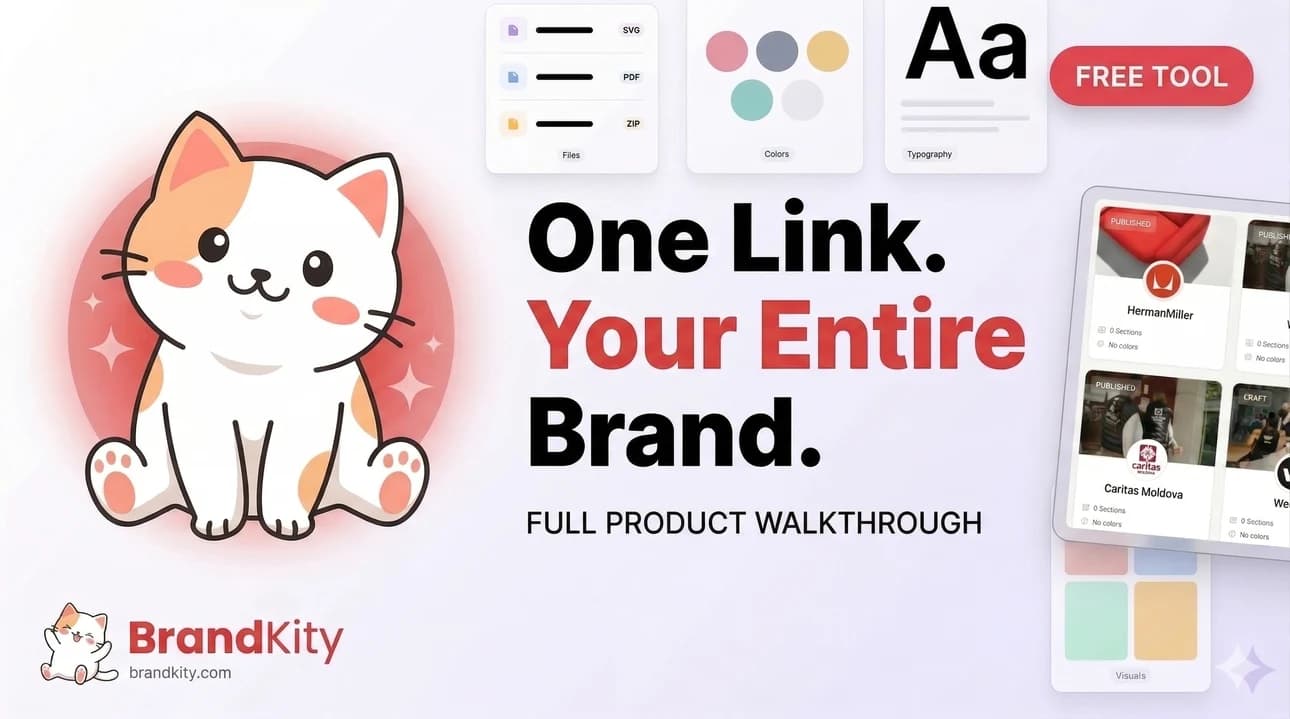
Over the last few years, a category of dedicated brand hosting platforms has grown to fix this. Here’s how the major ones compare, and where a newer, leaner option like BrandKity fits in.
Frontify
Frontify is the closest thing to an industry standard for enterprise brand management. It combines digital asset management, brand guidelines, and design system documentation into one connected brand portal, and it now ships with AI features like Brand Assistant and MCP support so AI tools can pull tone, usage rules, and approved assets directly.
Frontify is genuinely powerful, but it’s built for mid-market to enterprise teams, and priced accordingly, plans start around $79/month and scale up fast for larger orgs. If you’re a solo designer, a small agency, or a freelancer managing a handful of client brands, it’s more platform than you need.
zeroheight
zeroheight leans more toward design system documentation than brand guidelines specifically, think components, code snippets, and dev-facing documentation rather than logos, colors, and brand voice for a general audience. Its MCP support for AI agents is strong, but that’s gated behind a paid plan, and the tool overall is aimed at product and design teams, not brand or marketing.
Bynder and Brandfolder
Both are enterprise-grade digital asset management platforms with brand guideline features layered in. Bynder in particular is built for large-scale content operations, and Brandfolder is known for clean search and AI-powered auto-tagging. Both are solid if your core problem is asset storage at scale across a large organization, but neither was designed primarily around presenting a polished, client-facing brand portal.
Canva Brand Kit
Good for small teams already living inside Canva, lets you lock in brand colors, fonts, and logos at the workspace level. But it’s a feature inside Canva, not a standalone brand portal you can hand to a client or present under your own domain.
Where BrandKity fits
Most of the platforms above were built for large marketing departments managing one big brand internally. BrandKity was built for a different problem: designers, freelancers, and agencies who need to build and host branded, presentable portals for multiple clients, quickly, and often under their own white-label domain.
A few things that set it apart:
- Built-in AI editor. Instead of manually uploading files and building out sections, you describe what you want, “set up brand colors for a tech startup,” “add a 3D models block”, and BrandKity AI builds the blocks and content live in the editor.
- Native 3D model support, including formats like OBJ, GLB, and GLTF with an interactive viewer, something none of the platforms above offer out of the box.
- Legal Kits, a separate portal type for compliance documents with request-based access control, useful if you’re managing more than just visual brand assets.
- White-label, unlimited custom domains on the Agency plan, so every client’s portal can live on their own domain, not yours.
- Multiple portal templates per kit, from minimal and light to dark studio style, so each client’s presentation can actually look different.
- No lifetime deal, and that’s intentional. Running AI generation, 3D rendering, and storage sustainably costs real money, and platforms that sell lifetime access on heavy-compute tools tend to run into trouble as usage scales. BrandKity is priced to stay sustainable long-term, currently with a significant ongoing discount rather than a one-time deal that risks the platform’s future.
The takeaway
If you’re running brand operations for a large enterprise, Frontify or Bynder are hard to beat. If your work is component documentation, zeroheight is purpose-built for that. But if you’re a freelancer, designer, or small agency who needs to build and host clean, branded portals for multiple clients fast, without the enterprise price tag or complexity, BrandKity is worth a look.
You can see it live here: brandkity.com/demo, or try the AI builder directly: https://brandkity.com/brandkity-ai
Saurabh Kumar
Founder, BrandKity
Saurabh writes about practical brand systems, faster client handoffs, and scalable workflows for designers and agencies building repeatable delivery operations.
Connect on LinkedIn