
Why Agencies Need a Single Source of Truth for Brand Assets
Agencies operate at the intersection of creativity, client expectations, and tight deadlines. Managing the vast array of brand assets required for div…
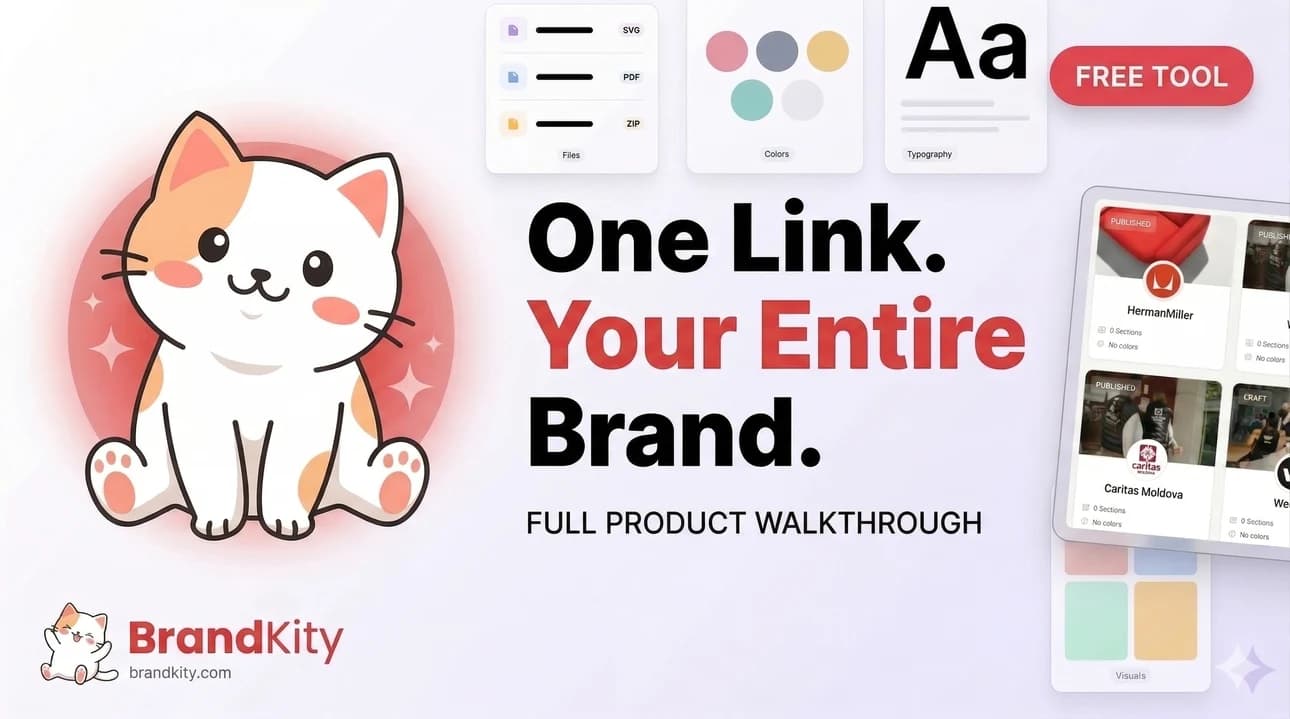
Table of contents
- Why is Managing Brand Assets a Constant Headache for Agencies?
- The Hidden Costs of Scattered Files and Outdated Versions
- Client Frustration from Inconsistent Branding and Slow Deliveries
- Draining Creative Resources on Asset Retrieval, Not Creation
- What Exactly is a Single Source of Truth for Brand Assets?
- Defining a Centralized Brand Hub
- How a Unified Brand Portal Transforms Agency Workflows
- Streamlining Onboarding for New Clients and Team Members
- Elevating Client Handoff and Brand Consistency
- Ensuring Every Client Receives Accurate, Up-to-Date Assets Through a Single Link
- Mitigating Brand Dilution Across Channels and Campaigns
- The Tangible Benefits: Boosting Agency Efficiency and Profitability
- Reducing Redundant Work and Asset Recreation Time
- Freeing Up Creative Teams for Strategic Initiatives
- Quantifying the Time and Cost Savings for Agencies
- Key Capabilities of an Ideal Brand Asset Management Platform for Agencies
- Intuitive Interface and Fast Onboarding for Any Team
- Secure Sharing, Version Control, and Granular Access Controls
- Modern Brand Portals and Shareable BrandKit Links for Effortless Delivery
- Implementing a Single Source of Truth: A Practical Guide for Agencies
- Assessing Your Current Brand Asset Landscape and Pain Points
- Building a Migration Strategy for Existing Assets and Guidelines
- Fostering Adoption Across Your Agency and Client Base
- Avoiding Common Pitfalls in Brand Asset Management for Agencies
- The Dangers of a ‘Set It and Forget It’ Mentality
- Overcoming Resistance to Change in Agency Culture
- Ensuring Scalability as Your Agency and Client Portfolio Grows
- Future-Proofing Your Agency with Centralized Brand Operations
- Adapting to Evolving Brand Guidelines and Marketing Trends
- Maintaining Brand Integrity in a Dynamic Digital Landscape
- Frequently Asked Questions About Brand Asset Management for Agencies
- How does a SSOT differ from a simple cloud storage solution?
Agencies operate at the intersection of creativity, client expectations, and tight deadlines. Managing the vast array of brand assets required for diverse campaigns and clients can quickly become an organizational nightmare, often overshadowing the strategic work of crafting compelling brand narratives.
This constant struggle with asset retrieval, version control, and consistent delivery not only impacts operational efficiency but also strains client relationships and ultimately, an agency’s bottom line. Understanding these challenges is the first step toward implementing solutions that empower agencies to thrive.
Why is Managing Brand Assets a Constant Headache for Agencies?
The Hidden Costs of Scattered Files and Outdated Versions
Agencies frequently contend with brand assets dispersed across local drives, disparate cloud storage services, and forgotten email attachments. This fragmentation inevitably leads to significant hidden costs. Teams waste countless hours searching for the correct logo, the latest campaign imagery, or the approved brand color palette, instead of focusing on creative output. Consider an example: a mid-sized agency might lose 15-20 hours per week across its design and marketing teams simply due to asset hunting and rework caused by using outdated files. This inefficiency directly impacts project timelines, inflates operational expenses, and can even damage an agency’s reputation when deadlines are missed or inconsistent branding is delivered. Establishing robust version control and a centralized storage strategy is paramount to reclaim these lost resources and ensure brand integrity. The constant challenge of locating current materials often means critical information is missing, forcing teams to rely on assumptions or time-consuming verification processes.
Client Frustration from Inconsistent Branding and Slow Deliveries
Nothing erodes client trust faster than inconsistent branding or delayed project deliveries. When an agency’s internal asset management is chaotic, it directly manifests in the client experience. Imagine a client receiving a website mockup featuring an old logo, while a social media campaign uses the updated one; such discrepancies signal a lack of organizational rigor and attention to detail. These inconsistencies are not merely aesthetic; they reflect poorly on the client’s brand image and can cause significant operational headaches for them. Slow delivery, often a symptom of prolonged asset retrieval, further compounds this frustration. Clients expect agility and precision, and when an agency struggles to quickly access and deploy accurate brand elements, it undermines their perception of the agency’s capability. This friction can strain relationships, potentially leading to lost retainer business or difficulties securing new contracts. For agencies, ensuring immediate and consistent access to the correct client brand assets is crucial for maintaining strong, trusting partnerships.
Draining Creative Resources on Asset Retrieval, Not Creation
Creative professionals in agencies are hired for their ability to conceptualize, design, and innovate, not to function as digital librarians. Yet, a disproportionate amount of time is often spent navigating complex folder structures, searching shared drives, or chasing down colleagues for specific brand assets. This process is not only tedious but also a profound drain on creative resources. Designers who could be iterating on new concepts or refining campaigns are instead bogged down in asset retrieval. This inefficiency stifles innovation and leads to creative burnout. Example: a graphic designer might spend 10% of their workday just trying to locate approved image assets or font files, time that could be dedicated to actual design work. This diversion of talent from creation to administration represents a significant opportunity cost for agencies. To combat this, implementing a robust search and tagging system within a centralized platform becomes essential, allowing creatives to instantly find what they need and redirect their energy towards what they do best: producing compelling brand experiences. This shift ensures that the agency’s most valuable assets – its creative minds – are utilized optimally.
What Exactly is a Single Source of Truth for Brand Assets?
Defining a Centralized Brand Hub
A single source of truth (SSOT) for brand assets is essentially a centralized, authoritative repository where every approved and current brand-related file resides. For agencies, this means a dedicated digital hub that houses logos, typography, color palettes, imagery, video, brand guidelines, and any other creative collateral pertinent to a client’s brand. It transcends simple cloud storage by offering structure, metadata, and intelligent organization that makes assets easily discoverable and consistently up-to-date. The core benefit is eliminating ambiguity: there’s only one place to go for the definitive version of any asset, ensuring everyone — from internal teams to external partners and clients — is always working with the correct materials. This hub functions as the definitive reference point, providing clarity and control over how a brand is presented and perceived. This concept is vital for agencies managing numerous client brands, each with its unique identity and requirements, fostering an environment of precision and brand integrity.
How a Unified Brand Portal Transforms Agency Workflows
Streamlining Onboarding for New Clients and Team Members
A unified brand portal acts as an indispensable tool for agencies, significantly streamlining the onboarding process for both new clients and internal team members. Instead of disparate documents and fragmented instructions, new hires gain immediate access to an organized repository containing all client brand guidelines, approved assets, and relevant project documentation. This immediate immersion drastically reduces the learning curve and ensures brand consistency from day one. Example: A new designer joining the team can access the complete BrandKit for a client within minutes, understanding the brand’s visual identity and tone of voice without extensive hand-holding. Similarly, when onboarding a new client, the agency can provide them with a dedicated, secure portal link housing all their brand assets, simplifying the initial information exchange and setting a professional precedent. This eliminates delays and common misunderstandings that arise from manual file transfers or incomplete asset dumps, enhancing efficiency and client satisfaction. Effectively, this solution can help with cross-functional team collaboration. Designers, copywriters, strategists, and account managers can all access the exact same approved assets, brand guidelines, and project collateral from a single platform. This ensures everyone is working from the same playbook, eliminating discrepancies and facilitating a shared understanding of client brands. For instance, a content writer preparing copy for a new campaign can effortlessly pull the latest brand messaging and approved imagery directly from the portal, guaranteeing alignment with the visual identity. This integrated approach not only boosts internal efficiency but also strengthens external client relationships by presenting a cohesive, unified agency front. By making brand assets universally accessible and easily shareable, agencies can cultivate a more collaborative culture, where teams work in sync, delivering consistent and impactful brand experiences.
Elevating Client Handoff and Brand Consistency
Ensuring Every Client Receives Accurate, Up-to-Date Assets Through a Single Link
The client handoff process is a critical touchpoint for agencies, often marred by the cumbersome transfer of large files or the risk of delivering outdated assets. A single source of truth simplifies this dramatically by enabling agencies to provide clients with a single, dynamic shareable link to their complete brand asset library. This link acts as a live portal, ensuring clients always access the most current and accurate versions of their logos, brand guidelines, photography, and other collateral. Gone are the days of clients rummaging through old email attachments or confusing folder structures. This streamlined delivery mechanism not only elevates the agency’s professionalism but also significantly reduces potential errors and reworks on the client’s end. This approach directly contributes to brand consistency, as the client is always working with approved assets, regardless of when they access them. Agencies can ensure that their meticulously crafted brand identities are maintained long after project completion, solidifying trust and enhancing perceived value. This is a crucial element for
Mitigating Brand Dilution Across Channels and Campaigns
Brand dilution is a persistent threat for any brand, particularly when assets are scattered and usage guidelines are unclear. Agencies, by centralizing all brand assets within a single source of truth, play a crucial role in mitigating brand dilution across various channels and campaigns. The portal acts as a vigilant guardian of brand consistency, ensuring that every piece of communication—from a digital ad to a print brochure—adheres to established visual and messaging standards. This prevents the unintentional use of outdated logos, incorrect color codes, or off-brand imagery that can fragment a brand’s identity and weaken its market presence. By enforcing usage policies and providing easy access only to approved assets, the agency empowers itself and its clients to maintain a unified brand voice and visual integrity. Example: A global brand working with multiple agencies can ensure all its partners are pulling from the same portal, leading to a consistently strong brand image worldwide. This proactive approach to brand governance is essential for long-term brand equity and market recognition.
The Tangible Benefits: Boosting Agency Efficiency and Profitability
Reducing Redundant Work and Asset Recreation Time
One of the most immediate and impactful benefits of adopting a single source of truth for brand assets within an agency is the dramatic reduction in redundant work. Without a centralized system, creative teams and account managers often waste valuable hours searching through scattered folders, outdated email attachments, or disparate cloud drives to find the correct logo, brand guidelines, or marketing collateral. This fragmented approach frequently leads to the recreation of assets that already exist but are simply undiscoverable, draining resources and increasing the risk of brand inconsistency across client projects. By consolidating all approved brand assets into one accessible platform, agencies eliminate the need for constant asset hunting and recreation, streamlining workflows significantly.
Freeing Up Creative Teams for Strategic Initiatives
When designers and content creators are no longer burdened by menial tasks like searching for the latest version of a client’s brand font or recreating an existing template, their time becomes available for more strategic, high-value activities. A centralized brand asset platform liberates creative teams to focus on innovation, strategic ideation, and the development of impactful campaigns that truly drive client success. Instead of being reactive to asset requests, they can proactively engage in creative problem-solving, explore new design concepts, and contribute more deeply to the agency’s overall strategic direction. This shift not only enhances job satisfaction but also directly translates into better outcomes for clients and a stronger competitive edge for the agency.
Quantifying the Time and Cost Savings for Agencies
The financial impact of a single source of truth for brand assets is substantial and quantifiable. Consider an agency with 20 creative and account team members, each spending an average of 3-5 hours per week on asset management tasks—searching, requesting, or recreating. At an average hourly rate of $50, this equates to 60-100 lost hours per week, or an annual cost of $150,000 to $250,000 in inefficient labor. By implementing a robust brand asset management solution, agencies can realistically cut this wasted time by 50% or more, leading to direct savings of tens of thousands of dollars annually. Beyond direct labor costs, a streamlined system minimizes project delays, reduces revision cycles, and improves client satisfaction by ensuring brand consistency, ultimately boosting the agency’s profitability and reputation. For a deeper dive into the organizational benefits, consider how effective brand asset management can organize client brands.
Key Capabilities of an Ideal Brand Asset Management Platform for Agencies
Intuitive Interface and Fast Onboarding for Any Team
For agencies, the adoption of any new technology hinges on its ease of use and the speed at which both internal teams and external clients can get up to speed. An ideal brand asset management platform must feature an intuitive interface that requires minimal training, allowing designers, account managers, and even less tech-savvy stakeholders to navigate and utilize it effectively from day one. Complex systems with steep learning curves often face significant resistance and low adoption rates. A platform designed for fast onboarding means agencies can quickly integrate it into their existing workflows, ensuring that the entire team can leverage its benefits without lengthy interruptions or extensive training programs, ultimately accelerating time-to-value.
Secure Sharing, Version Control, and Granular Access Controls
Protecting client brand assets is paramount for agencies, making robust security features non-negotiable. The platform must offer secure sharing capabilities, allowing agencies to distribute assets confidently without compromising intellectual property. Integrated version control is critical; it ensures that everyone is always working with the most current iteration of an asset, preventing costly mistakes and rework caused by outdated files. Furthermore, granular access controls are essential, enabling administrators to define precise permissions for different users or groups—whether they are agency creatives, external vendors, or clients. This level of control ensures that only authorized individuals can view, download, or modify specific assets, maintaining strict security and compliance standards across all projects.
Modern Brand Portals and Shareable BrandKit Links for Effortless Delivery
The ability to deliver brand assets to clients and partners effortlessly is a game-changer for agencies. An ideal platform will provide modern brand portals that act as a single, beautifully organized hub for all brand-related content. These portals should be customizable, reflecting the client’s brand identity, and easy to navigate. Critically, the platform should support shareable BrandKit links, allowing agencies to distribute an entire brand package—including logos, guidelines, color palettes, and typography—through a single, dynamic URL. This eliminates the cumbersome process of sending large email attachments, using unreliable file-sharing services, or directing clients to scattered cloud folders. Such streamlined client delivery significantly enhances the professional image of the agency and improves client satisfaction. To explore how this capability transforms client interactions, consider whether your DAM platform is designed for modern brand delivery.
Implementing a Single Source of Truth: A Practical Guide for Agencies
Assessing Your Current Brand Asset Landscape and Pain Points
Before implementing any new system, agencies must undertake a thorough assessment of their current brand asset landscape. This involves conducting an inventory of all existing client assets, from logos and imagery to video files and brand guidelines, across all storage locations—be it local drives, various cloud services, or even legacy physical archives. More importantly, this phase requires identifying specific pain points and inefficiencies in current workflows. Are designers wasting time searching for files? Are account managers sending outdated versions? Are clients struggling to access necessary assets? Engaging key stakeholders, including creative leads, account managers, and project coordinators, in this assessment process will provide critical insights into existing challenges and build initial buy-in for the new solution. Understanding these deeply rooted issues is the first step towards a successful transition.
Building a Migration Strategy for Existing Assets and Guidelines
Once the assessment is complete, the next critical step is to develop a robust migration strategy for consolidating existing assets into the new single source of truth. This involves more than simply uploading files; it requires careful planning for organization, categorization, and metadata tagging to ensure future discoverability. Agencies should establish clear guidelines for naming conventions, define metadata schemas (e.g., usage rights, project codes, dates), and determine who will be responsible for the actual migration process. Prioritize assets based on usage frequency and importance, tackling the most critical client brands first. This systematic approach ensures that the new platform is populated with accurate, well-organized content from day one, laying a solid foundation for efficient asset management and avoiding a chaotic, piecemeal upload that perpetuates disorganization. This strategic approach is vital for ensuring brand consistency.
Fostering Adoption Across Your Agency and Client Base
Even the most powerful brand asset management platform will fail without widespread adoption. Agencies must actively foster a culture of embracing the new single source of truth. This begins with internal training sessions that highlight the specific benefits for each role—how designers save time, how account managers ensure brand compliance, and how project managers streamline client handoffs. Create clear documentation and designate internal champions who can support their colleagues. For clients, introduce the new system with clear communication, demonstrating how it simplifies their access to brand assets and strengthens their brand identity. Provide simple onboarding instructions and emphasize the convenience of a single shareable link for all their brand needs. Ongoing communication and support are key to embedding the platform into daily operations for both internal teams and external stakeholders, ensuring its long-term success. Considering how your current software impacts client onboarding is crucial here.
Avoiding Common Pitfalls in Brand Asset Management for Agencies
The Dangers of a ‘Set It and Forget It’ Mentality
Implementing a brand asset management platform is not a one-time project; it requires ongoing attention to remain effective. Agencies that adopt a ‘set it and forget it’ mentality risk quickly undermining the very benefits they sought to achieve. Brand assets evolve: new campaigns are launched, guidelines are updated, and older assets become obsolete. Without regular maintenance, audits, and updates, the single source of truth can rapidly become cluttered with outdated, incorrect, or redundant files. This resurgence of disorganization leads to the very inefficiencies and brand inconsistencies the platform was meant to solve. Agencies must establish a clear governance strategy, assigning responsibility for ongoing content curation, permission management, and system health checks to ensure the platform remains a reliable and accurate resource. Continuous engagement prevents digital decay and maintains the system’s integrity.
Overcoming Resistance to Change in Agency Culture
Introducing a new system, regardless of its benefits, often encounters resistance within an established agency culture. Team members may be comfortable with existing, albeit inefficient, workflows, or they may feel overwhelmed by the prospect of learning a new tool. Overcoming this requires a strategic change management approach. Leadership must clearly communicate the ‘why’ behind the change, emphasizing the individual and collective benefits rather than just the mandate. Provide ample training and ongoing support, addressing concerns directly and practically. Highlighting success stories or “wins” early on can build momentum. Crucially, involve key team members in the implementation process to foster a sense of ownership and advocacy. By demonstrating how the new platform simplifies tasks and saves time, agencies can transform resistance into enthusiasm, ensuring wide-scale user adoption and maximizing the return on their investment.
Ensuring Scalability as Your Agency and Client Portfolio Grows
Agencies are dynamic environments, constantly growing their client base and expanding their service offerings. A significant pitfall in brand asset management is choosing a platform that cannot scale effectively with this growth. What works for five clients and 1,000 assets might become a bottleneck for 50 clients and 100,000 assets. Agencies must consider the platform’s capacity for increased storage, higher user volumes, and the ability to manage more complex brand structures without compromising performance or usability. Evaluating features like flexible user licensing, advanced search capabilities, and integration options with other agency tools (e.g., project management software) is vital. Selecting a solution with inherent scalability ensures that the single source of truth remains efficient and robust, supporting the agency’s growth without necessitating a disruptive and costly migration to a new system down the line. When considering platforms, it’s worth assessing options that cater to various scales, such as whether Bynder might be overkill for certain agency sizes.
Future-Proofing Your Agency with Centralized Brand Operations
Adapting to Evolving Brand Guidelines and Marketing Trends
Agencies operate in an environment where brand guidelines and marketing trends are in constant flux. Without a single source of truth (SSOT), adapting to these changes becomes a cumbersome and error-prone process. Imagine a client updates their logo or introduces a new color palette; a decentralized system means hours spent tracking down every instance of the old asset across various projects, drives, and team members. A SSOT, like a modern brand portal, ensures that the moment an asset or guideline is updated, the change is instantly reflected for everyone, preventing the use of outdated materials and safeguarding streamlined creative workflows. Agencies that establish this centralized foundation now will be better positioned to harness generative AI’s potential for their clients, reducing manual oversight and accelerating creative output.
Maintaining Brand Integrity in a Dynamic Digital Landscape
In today’s fast-paced digital landscape, maintaining brand integrity across numerous channels and campaigns is a significant challenge. Client brands are constantly evolving, engaging with diverse audiences on platforms ranging from social media to immersive digital experiences. Without a centralized system, discrepancies can easily arise, leading to diluted brand messaging and a lack of professionalism. A SSOT mitigates this risk by enforcing version control and providing a definitive reference point for all approved brand elements. This ensures that every piece of communication, regardless of who created it or where it’s published, aligns perfectly with the brand’s established identity, building trust and strengthening client relationships.
Frequently Asked Questions About Brand Asset Management for Agencies
How does a SSOT differ from a simple cloud storage solution?
A single source of truth (SSOT) for brand assets transcends the capabilities of basic cloud storage platforms like Google Drive or Dropbox in several critical ways. While cloud storage offers file hosting, a SSOT specifically for brand assets integrates robust metadata tagging, advanced search filters, and comprehensive version control, ensuring users always find and utilize the correct, latest asset. Crucially, a SSOT often incorporates brand guideline integration, linking assets directly to usage rules, and offers granular access permissions to control who sees and downloads what. This specialized functionality transforms mere storage into a dynamic platform for brand governance and efficient client delivery, ensuring proper usage and eliminating scattered folders and outdated PDFs. To understand how a modern platform supports this, consider how effective partnership.
By strategically embracing a single source of truth for brand assets, agencies can not only streamline current operations but also build a resilient foundation for future growth and innovation. This proactive approach ensures brand consistency, maximizes efficiency, and strengthens client relationships in an increasingly dynamic market.
Saurabh Kumar
Founder, BrandKity
Saurabh writes about practical brand systems, faster client handoffs, and scalable workflows for designers and agencies building repeatable delivery operations.
Connect on LinkedIn